
Last updated: October 2026
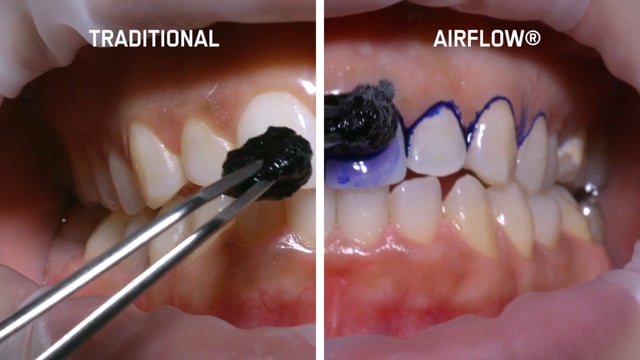
Guided Biofilm Therapy (GBT) is a dental cleaning method that uses a warm mix of water, air and a fine powder (AIRFLOW) to remove plaque and stains, instead of relying mainly on scraping and a gritty polish. Any hard tartar left behind is removed with a slim ultrasonic tip. Research shows GBT cleans about as well as a conventional cleaning, and most patients find it more comfortable and faster.
Here’s how GBT works, how it compares with a regular cleaning, who it’s best for, and what to expect at your visit.
What Is Guided Biofilm Therapy?
Your teeth are constantly covered by biofilm, the sticky layer of bacteria better known as plaque. If it isn’t removed, it hardens into tartar and can lead to cavities and gum disease.
GBT is a step-by-step cleaning protocol developed by the Swiss company EMS. Instead of scraping every tooth and finishing with a gritty paste, it:
- Shows where the biofilm is, using a harmless disclosing dye
- Removes biofilm and stains with a gentle air-and-powder spray (AIRFLOW)
- Removes any remaining hard tartar with a fine ultrasonic tip (PIEZON PS), only where it’s needed
The powder is made from erythritol, a fine, low-abrasion sugar alcohol, so it cleans without scratching enamel, fillings or crowns.
The 8 Steps of GBT
| Step | What happens |
|---|---|
| 1. Assess | We check your teeth, gums and any implants, and you rinse with an antibacterial mouthwash |
| 2. Disclose | A dye shows where plaque is hiding |
| 3. Motivate | We show you the areas you’re missing at home and how to clean them |
| 4. AIRFLOW | Warm water, air and fine powder remove plaque, stains and young tartar above and just below the gumline |
| 5. PERIOFLOW | A thin nozzle cleans deeper gum pockets, if you have them |
| 6. PIEZON PS | A slim ultrasonic tip removes any remaining hard tartar |
| 7. Check | We make sure all the biofilm is gone |
| 8. Recall | We set your next visit based on your risk |
Because AIRFLOW removes stains, a separate polishing step usually isn’t needed.
GBT vs. Regular Cleaning
| Guided Biofilm Therapy | Conventional cleaning | |
|---|---|---|
| Main tools | Air-powder spray, then a fine ultrasonic tip if needed | Hand scalers and/or ultrasonic scaler, then polishing paste |
| Plaque detection | Disclosing dye shows exactly where plaque is | Based on what the hygienist sees |
| Comfort | Most patients find it gentler, with less scraping | Can feel uncomfortable for sensitive teeth |
| Stain removal | Built in | Separate polish |
| Effectiveness | Similar results in studies | Proven standard |
| Implants, crowns, braces | Gentle on all of them | Needs special instruments around implants |
What the research says
- A randomized trial of 50 patients in periodontal maintenance found GBT as effective as conventional scaling and root planing, with shorter treatment time and better patient experience.
- A 2022 meta-analysis found air polishing gave similar clinical results to conventional cleaning with better patient comfort, though some included studies had limitations.
- An earlier systematic review found air-polishing devices as effective as conventional treatment, with a possible advantage in comfort and time.
In short: GBT isn’t “stronger” than a regular cleaning, but it’s just as effective and usually more comfortable.
Who Is GBT Good For?
GBT can be a good choice if you:
- Find regular cleanings uncomfortable or have sensitive teeth
- Have dental implants, crowns, bridges or veneers
- Wear braces or other orthodontic appliances
- Have gum disease and need regular maintenance cleanings
- Get stains from coffee, tea, red wine or smoking
- Have moderate to heavy buildup
Are there any downsides?
- Heavy, hard tartar still needs instruments. GBT removes it with the PIEZON tip, so you may still feel some vibration in those areas.
- It isn’t a replacement for treatment of active gum disease if you need deeper therapy. We’ll tell you if you need more than a cleaning.
- Some people with certain breathing conditions or allergies may need a different approach. Tell us about your health history.
Does Insurance or CDCP Cover GBT?
GBT is a way of doing your regular cleaning, so it’s billed through the usual cleaning (scaling and polishing) services. Whether there’s any extra cost depends on your plan and how much time you need. We’ll confirm before your appointment.
If you’re covered by the Canadian Dental Care Plan, cleanings fall under the plan’s scaling limits (for adults, up to 4 units per 12 months). What does CDCP cover? →
What to Expect at Your GBT Visit
- Before: Tell us when you book that you’d like GBT.
- During: You’ll see where plaque is hiding, then feel a warm, gentle spray. Most patients describe it as more pleasant than scraping.
- After: Teeth feel smooth and clean. You can eat and drink right away.
- How often: Usually every 3 to 6 months, depending on your gum health and risk.
Guided Biofilm Therapy in Bells Corners and Nepean
Bells Corners Dental Studio offers Guided Biofilm Therapy for patients of all ages, including patients with implants, crowns and braces. Just let us know you’d like GBT when you book. We direct bill many insurers and accept the Canadian Dental Care Plan.
Ready for a gentler cleaning?
Book your next cleaning and ask for Guided Biofilm Therapy.
Book Online Call or Text (613) 421-2222 About GBT2150 Robertson Rd, Unit 9, Nepean, ON K2H 9S1 · CDCP accepted · Direct billing
Frequently Asked Questions
What is Guided Biofilm Therapy?
A step-by-step dental cleaning that uses a dye to show plaque, a warm air-and-powder spray to remove it and stains, and a fine ultrasonic tip for any remaining tartar.
Is GBT better than a regular cleaning?
Studies show it’s about as effective as a conventional cleaning, but most patients find it more comfortable and it’s often quicker.
Is Guided Biofilm Therapy available in Canada?
Yes. Bells Corners Dental Studio in Nepean, Ottawa offers GBT. Ask for it when you book.
What are the downsides of Guided Biofilm Therapy?
Hard tartar still needs an ultrasonic instrument, and GBT doesn’t replace deeper treatment for active gum disease.
Who is a good candidate for Guided Biofilm Therapy?
People with sensitive teeth, implants, crowns, braces, gum disease, heavy buildup or stains, and anyone who dislikes regular cleanings.
How much does Guided Biofilm Therapy cost?
GBT is billed through the usual cleaning services, so the cost depends on your insurance and how much cleaning you need. We’ll confirm your cost before your appointment.
Is GBT safe for dental implants?
Yes. The low-abrasion powder is designed to be gentle on implants, crowns and other restorations.
Sources
- Vouros I. et al., Guided Biofilm Therapy vs conventional scaling in periodontal maintenance, International Journal of Dental Hygiene (2022), PubMed
- Meta-analysis of air polishing vs conventional treatment, BMC Oral Health (2022), PubMed Central
- Ng E. et al., Air-polishing devices in periodontal maintenance: a systematic review, Quintessence International (2018)
- Dentistry.co.uk, The GBT clinical protocol for prophylaxis
- Government of Canada, CDCP Dental Benefits Guide
This article is general information and not a substitute for professional dental advice.


